


 Español
 Portugues
 Français
 Italiano
 Nederlands
 Polski
 Română
 lietuvių
 Hrvatski
Mulcher
A mulcher is a versatile machine designed to reduce organic material into smaller, manageable pieces, primarily for agricultural, landscaping, and land management tasks. It works by using rapidly rotating cutting tools—such as flails, hammers, or blades—to shred vegetation into fine mulch. This mulch can then be left on the ground to decompose, improving soil structure, moisture retention, and nutrient levels.Most mulchers are powered by internal combustion engines or connected to the power take-off of a tractor or other carrier vehicle. They come in various configurations, including self-propelled units, tractor-mounted attachments, and excavator-mounted heads. The choice depends on the type of work required: light-duty garden maintenance, orchard and vineyard care, roadside mowing, forestry clearing, or large-scale land reclamation.In agricultural settings, mulchers are frequently used to process crop residues, prune trimmings, and cover crops. By cutting and mixing plant material into the topsoil, they support sustainable farming practices and reduce the need for burning or removal of residues. In orchards and vineyards, a mulcher can pass between rows, chopping pruned branches and weeds, keeping the ground clean and reducing pest habitats.For forestry and land clearing, heavy-duty mulchers are capable of tackling dense brush, saplings, and even small trees. They are equipped with reinforced cutting drums and protective housings to handle tough conditions. These machines help create access paths, prepare building sites, maintain firebreaks, and restore overgrown land. Because the vegetation is mulched in place, there is often no need for additional transport or disposal, saving time and costs.In landscaping and municipal work, mulchers maintain parks, roadside verges, and utility corridors. They provide a neat finish, evenly distributing shredded material on the ground. This layer of mulch suppresses weeds, reduces erosion on slopes, and protects the soil surface from heavy rainfall and sun exposure.Safety and maintenance are crucial aspects of mulcher operation. Operators must be trained to handle flying debris, uneven terrain, and mechanical hazards. Regular inspection of blades or hammers, belts, bearings, and guards ensures consistent performance and prolongs service life. Proper adjustment of cutting height and forward speed helps avoid overloading the machine and leaving unprocessed material.Environmental benefits are an important advantage of using a mulcher. By recycling biomass directly on site, it supports a closed nutrient cycle and reduces reliance on chemical inputs. Mulching also contributes to carbon sequestration in the soil and helps maintain biodiversity by preserving ground cover. When selected and used correctly, a mulcher becomes an effective tool for combining productivity, landscape care, and ecological responsibility.
Products
Category:
-
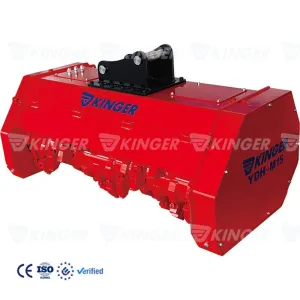
Mulcher
Category: Forestry machineryBrowse number: 632Number:Release time: 2026-02-27 17:11:38Categories: Forestry machinery
News
Category:
No search results found!
Case
Category:
No search results found!
Video
Category:
No search results found!
Download
Category:
No search results found!
Job
Category:
No search results found!
Featured Products
No search results found!



 WhatsApp
 Phone
Phone